- Blog
- EU Car Imports vs Non-EU Exports: Costs, VAT & Documents
Importing Cars Inside the EU vs Exporting From the EU: Key Differences
Compare importing cars inside and outside the EU and learn the key differences in customs duty, VAT, documents, registration rules, and transport.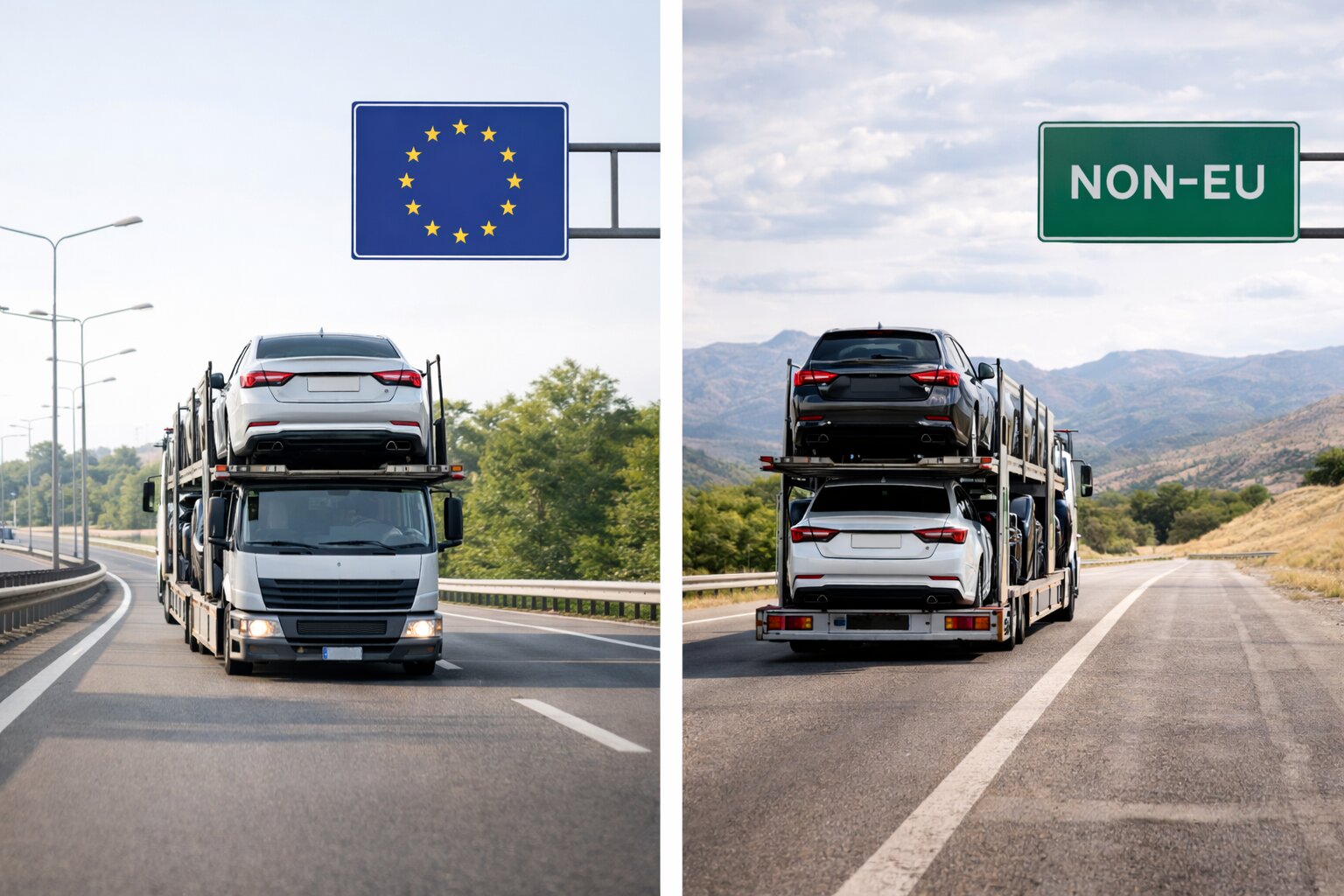
When you buy cars across borders, small details can make a big difference in how profitable your car trades are.
If you correctly estimate the full import cost and prepare the right documents in advance, you’ll be able to plan your deals better.
So, let’s see what the main differences are in the costs, paperwork, and rules for importing cars inside and outside the EU.
Das Wichtigste in Kürze
- Check the full import costs before buying: Customs duty, VAT, deposits, transport, and local rules affect the final cost.
- For EU imports, check the VAT scheme: The standard and margin VAT schemes work differently.
- For non-EU exports, plan for a VAT deposit: You’ll get the deposit back after export, but you still need to pay it upfront.
- Check trade agreements with your country: Prepare the EUR1 document, as it can grant you reduced or zero customs duty in some cases.
Customs duty - Differences between EU and non-EU imports
Customs duty is one of the most important duties related to import that you’ll encounter.
The difference between EU and non-EU imports is straightforward:
- Inside the EU: You usually don’t pay customs duty when you import a car, because the vehicle is moving within the EU single market.
- Outside the EU: You usually pay customs duty when you import a car, unless the destination country has a trade agreement with the EU and the car qualifies for reduced or zero duty.
So, in most cases, you won’t have to pay customs duty for EU imports.
But if you’re exporting outside of the EU, check if your country has a trade agreement with the EU, because this can lower your customs duty or remove it completely.
Do you need a EUR1 certificate?
When researching if you’ll need to pay customs duty for non-EU exports, you’ll often come across the document called the EUR1 certificate.
This document can help you get reduced or zero customs duty when your destination country has a trade agreement with the EU and the car meets the origin rules.
In our article dedicated to EUR1, we’ve compiled a list of countries in Europe, the Middle East, North Africa, and Eurasia that may accept the EUR1 certificate, grouped by region.
You can check that list to see if the EUR1 certificate may be relevant for your export market.
❗Important: Even if your country has a trade agreement with the EU and may accept the EUR1, that does not always mean this document will get you reduced or zero customs duty.
Rules can vary by vehicle and by customs office, so it’s best to check with local customs before import.
VAT
After customs duty, your next cost to consider is VAT, short for value-added tax. VAT depends on whether you’re buying within the EU or outside the EU, and on the VAT scheme used.
Let’s first see how VAT works in the EU.
Within the EU
Let’s say you’re buying and importing cars within the EU.
In that case, VAT depends on the VAT scheme used.
There are two main VAT schemes: the standard VAT system, and the margin scheme.
Here’s how each scheme works:
|
VAT scheme |
How it works |
|
Standard VAT scheme |
You buy the car at the net price and declare VAT in your country. |
|
Margin scheme |
You pay the full price, and you can’t deduct VAT separately. |
Now, let’s see what these schemes look like on eCarsTrade.
On eCarsTrade, the VAT scheme is shown clearly on each car listing, so you can know what VAT treatment to expect after purchase.
If a car is marked VAT deductible or VAT excluded, the price shown on the platform is the net price, without VAT.
So, the standard VAT scheme looks like this:
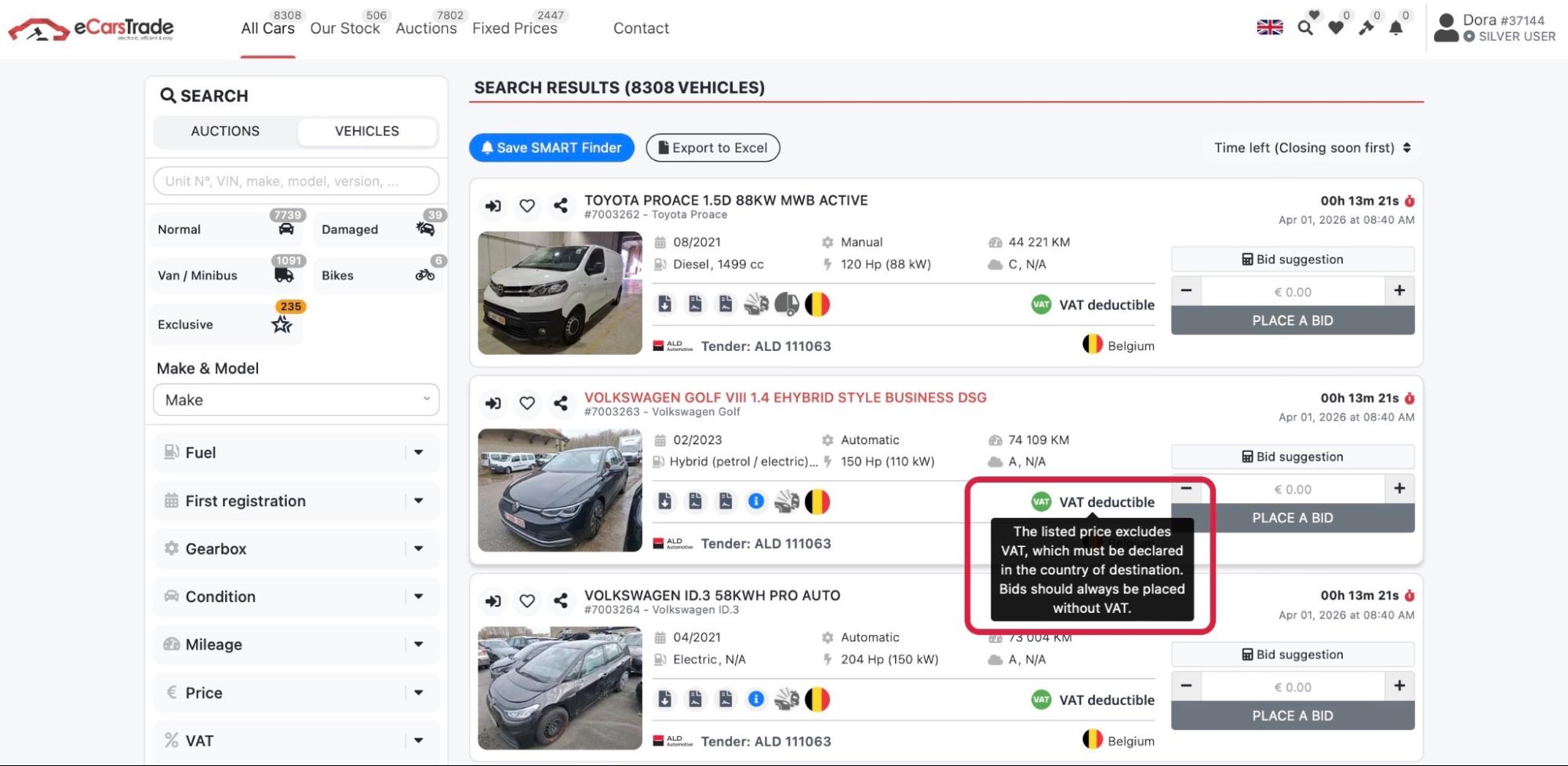
So, when you buy this type of car from another EU country, you pay the seller the net amount, and then declare VAT in your own country.
For example, if you buy a VAT deductible car in Belgium and import it into Germany, you pay the seller the net price and then declare VAT in Germany at the local rate, which is currently 19%.
If a car is marked Margin - VAT not deductible, it is sold under the margin scheme, which looks like this:
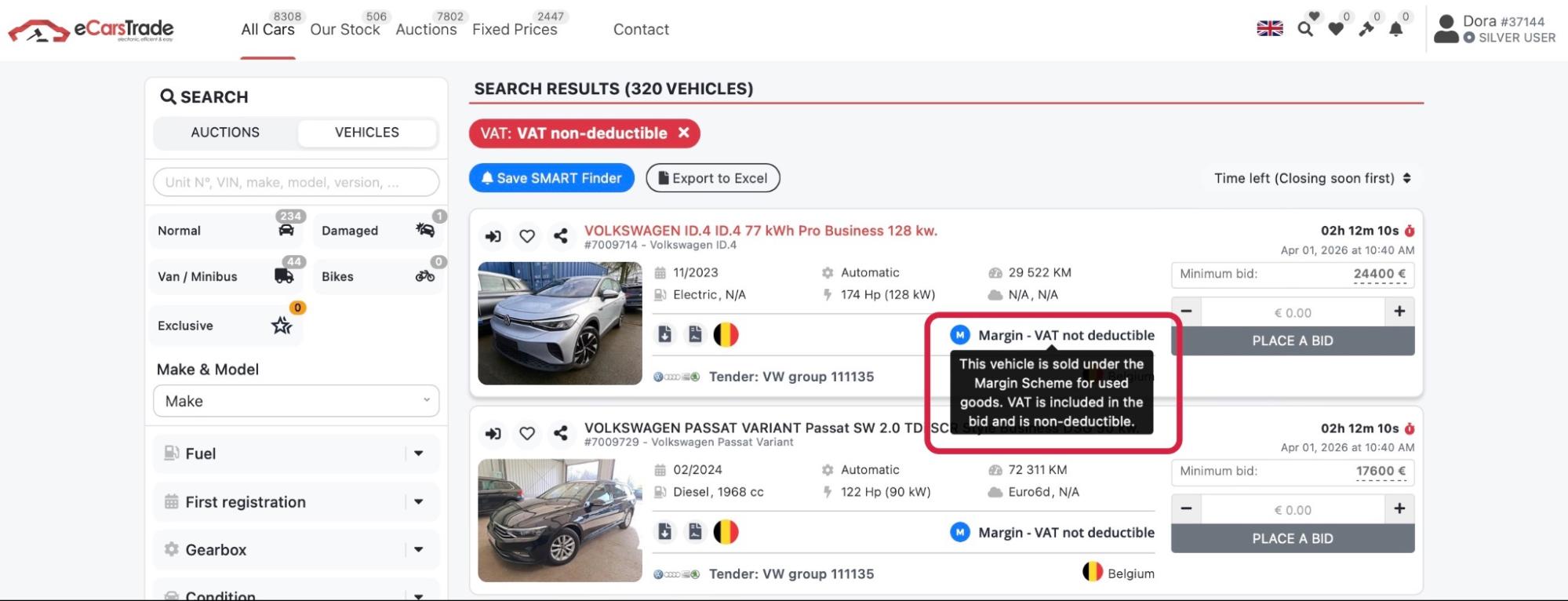
In that case, you pay the full price shown on the platform, but you can’t deduct VAT separately.
When you resell the car, VAT is only applied to your profit margin.
Outside of the EU
Now, let’s see how VAT is handled outside of the EU.
When you export a car outside of the EU, VAT depends on the rules in the destination country.
So, the final amount you pay can change from one market to another.
For instance, if you’re a car trader from Montenegro buying a car and exporting it from the Netherlands, you’ll need to follow the import tax rules in Montenegro.
This includes paying 21% VAT.
Besides VAT in the destination country outside the EU, there’s another thing related to VAT to keep in mind.
Most EU used-car sellers require non-EU buyers to pay a VAT deposit when buying a car.
Note that this VAT deposit is set by the seller, not by customs.
The practice is so common that even the official Norwegian Customs import guide mentions it and says the refund is handled between the buyer and the seller.

Source: Norwegian Customs
So, how do VAT deposits work in practice?
When you pay for the vehicle, you also pay an extra amount as a deposit.
In practice, this deposit is often the same as the local VAT in the seller’s country.
For example, if you buy a car from Belgium, you usually pay the car price plus a deposit based on the 21% Belgian VAT.
Once the car leaves the EU and the export is properly completed, and the EX-A export document has been officially registered by EU customs, you can request the VAT deposit refund.
eCarsTrade refunds the VAT deposit to the same bank account the clients used for the purchase.
Technical compliance and registration
Import-related costs aren’t the only factor that’s different in EU and non-EU imports.
You also need to check if the car meets the technical and registration rules in the destination country.
This part is usually simpler inside the EU, while outside of the EU, the rules can change from one country to another.
Within the EU
EU imports are easier because the car already meets EU standards.
The main thing to check is whether you have the right documents for registration.
The Certificate of Conformity (COC) helps a lot, since it shows that the car meets EU type-approval standards.
Bringing the COC is not necessary for registration in all EU members, but many EU countries do require it.
As always, you should check the registration rules in the destination country before you import the car.
Outside of the EU: different destination rules
Unlike the EU, where registration rules are more aligned, there is no common system outside of the EU.
Each country has its own import, technical, and registration rules.
For instance, Algeria doesn’t allow the import of diesel vehicles, and Morocco only allows the import of used cars that are less than five years old.
As you can see, the rules vary by import location, so it’s important to check the local regulations before buying.
Below, you’ll find a few examples of destination-specific rules outside of the EU.
|
Country |
Import regulations |
|
Vehicles have to be less than 15 years old and meet at least the Euro 5 standard. |
|
|
Used cars have to be less than 3 years old, and diesel vehicles are not allowed. |
|
|
Used cars have to be less than 5 years old. |
|
|
Used cars have to be less than 5 years old. |
|
|
Vehicles have to go through customs, NOVA notification, and local registration. |
|
|
You need to complete e-Form M before import. |
|
|
Vehicles have to pass local inspection and registration, and you need the C-8050 customs clearance certificate. |
What documentation do you need?
Some countries require specific documents for vehicle import, but a few documents are needed in almost all cases.
Specifically, the vehicle purchase invoice and the original registration papers are the documents you’ll always need.
A Certificate of Conformity is also a frequent requirement for both EU and non-EU imports.
Since used cars are frequently sold without their original COC certificates, you might have to purchase a copy from a provider like EUROCOC or COC Europe.
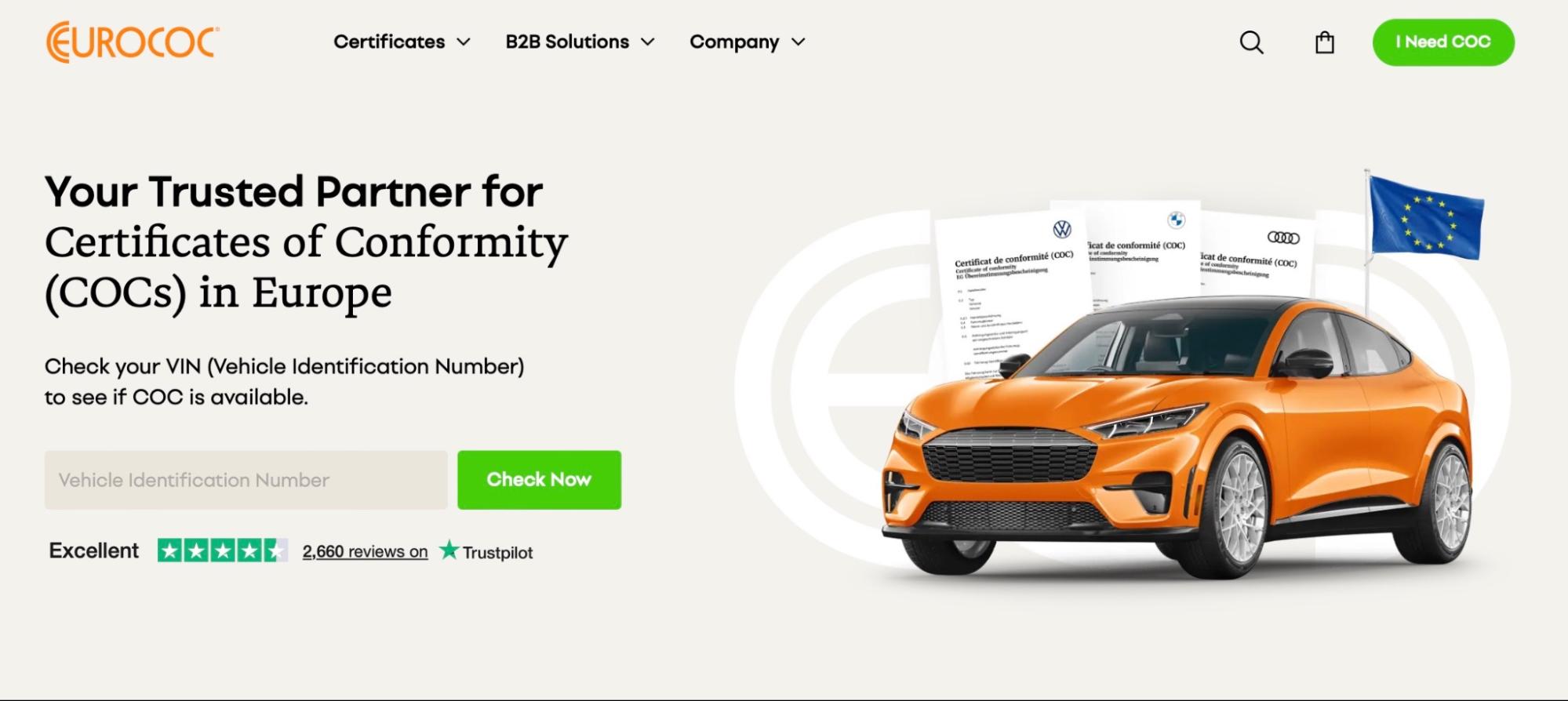
Source: EUROCOC
In addition to these, you’ll also need a CMR form if the car is shipped by truck.
There are also two important documents that are related directly to exporting outside the EU, and these are the EUR1 and the EX-A export declaration.
As we’ve seen above, the EUR1 can help reduce customs duty in some non-EU countries.
In some cases, you might use a Certificate of Origin instead of the EUR1 document, but you should first check with the destination country’s customs office.
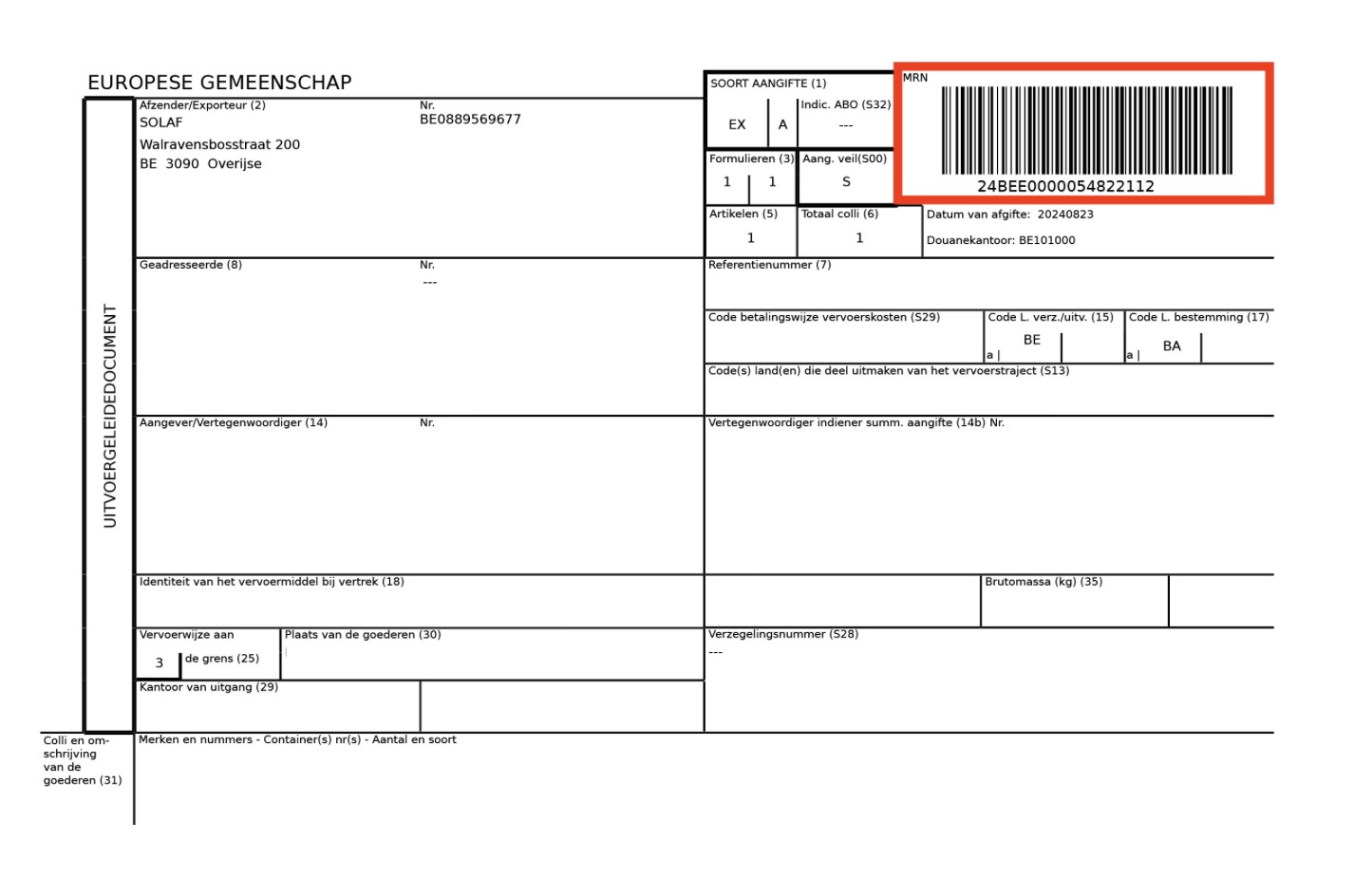
The EX-A export declaration is the document that proves the car has left the EU.
The EX-A also includes the MRN (Movement Reference Number), which you can use to track and confirm the export via the MRN Follow-up.
Let’s sum up the main documents you’ll need for import:
EU:
- Vehicle purchase invoice
- Original registration papers
- Certificate of Conformity (COC)
- CMR, if the car is transported by truck
- Any local registration or inspection documents required
Non-EU:
- All EU documents
- EX-A export declaration
- MRN (Movement Reference Number)
- EUR1 certificate, if applicable
- Certificate of Origin, if applicable
Transport and logistics - common methods and estimated timelines
Once you’ve handled the paperwork, it’s time to get the vehicle to your dealership.
The best transport method usually depends on the destination and the number of vehicles you’ve bought.
Inside the EU, truck transport is usually the simplest option.
Popular methods for transporting vehicles between dealerships outside of the EU include truck transport, ferry, RoRo shipping, or container shipping.
The timeline depends mainly on where the car is located and where it’s going.
You’ll now see a general overview of the most common transport methods and estimated delivery times by destination.
|
Destination |
Common transport method |
Estimated timeline |
|
EU countries |
Truck transport |
2–3 weeks |
|
Balkans |
Truck transport |
2–3 weeks |
|
North Africa |
Truck + ferry / transit plates |
3–4 weeks |
|
Middle East |
RoRo or container shipping |
3–6 weeks |
|
UK |
Truck + ferry |
2–3 weeks |
|
US |
RoRo or container shipping |
Up to 7 weeks |
Buying with eCarsTrade as a non-EU trader
That’s quite a lot of documents, taxes, and rules to keep in mind, right?
The good news is that eCarsTrade works with non-EU buyers regularly, and our Account Managers are there to answer any questions and guide you through the purchase.
So, even if non-EU imports involve more paperwork, the eCarsTrade platform and support team help make the buying process clearer and easier to manage.